Services :
Introduction to Carbon Capture and Its Importance
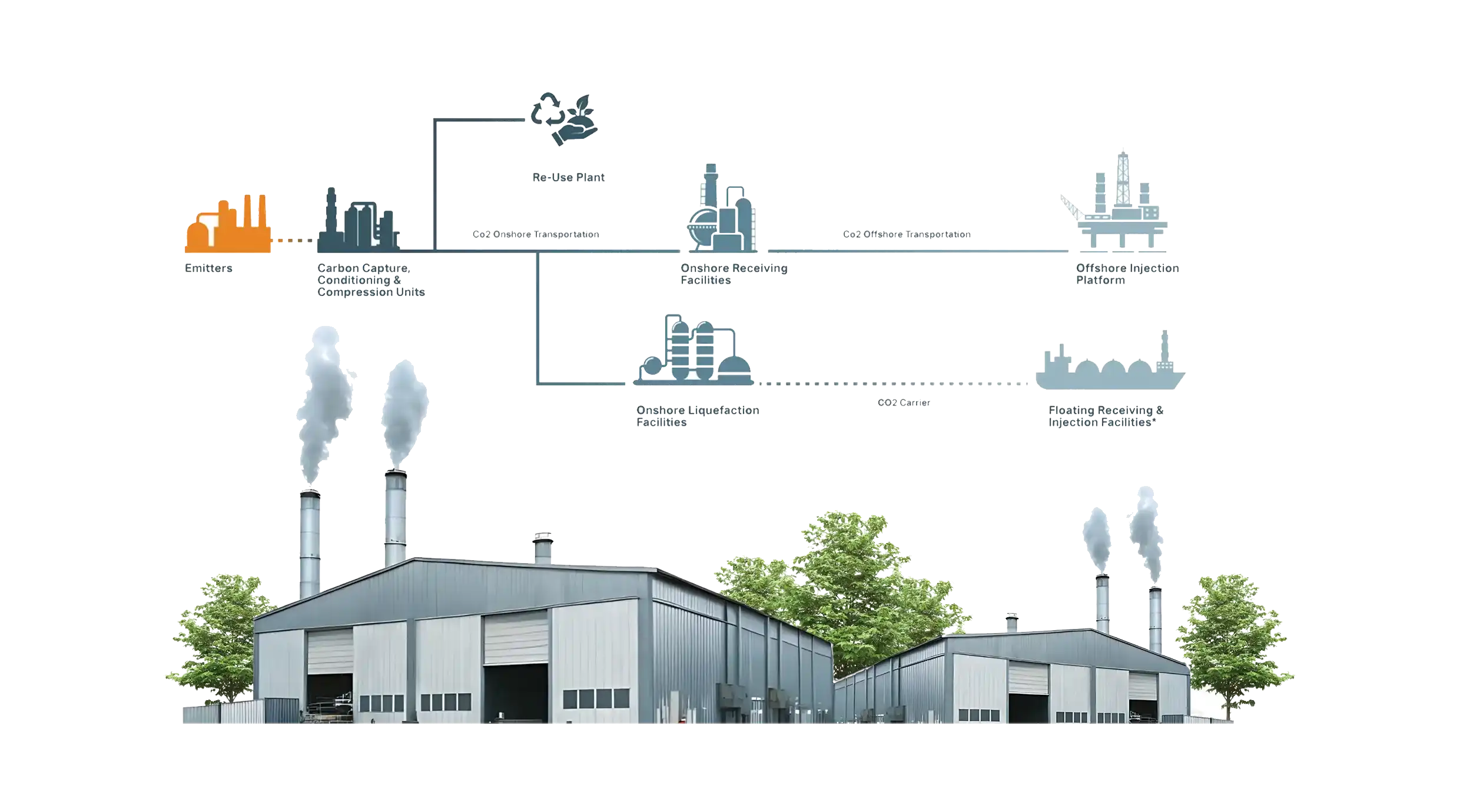
Given the escalating challenges of climate change, reducing carbon dioxide (CO₂) emissions has become a critical priority for governments and industries worldwide. Carbon capture, utilization , and storage technologies from industrial exhaust gases (CO₂) stand at the forefront of this global transition, as they enable direct capture (CCUS) before CO₂ enters the atmosphere.
Captured gases can be reused, converted into new materials, or safely stored underground, allowing industries to achieve net-zero emission targets (Net-Zero) without halting essential operations.
Among various capture methods, including physical absorption,cryogenic separation, and membrane technologies, amine-based capture is recognized as the most common and proven commercial method due to its reliability, scalability, and compatibility with diverse industries.
Understanding Amine-Based Carbon Capture Technology
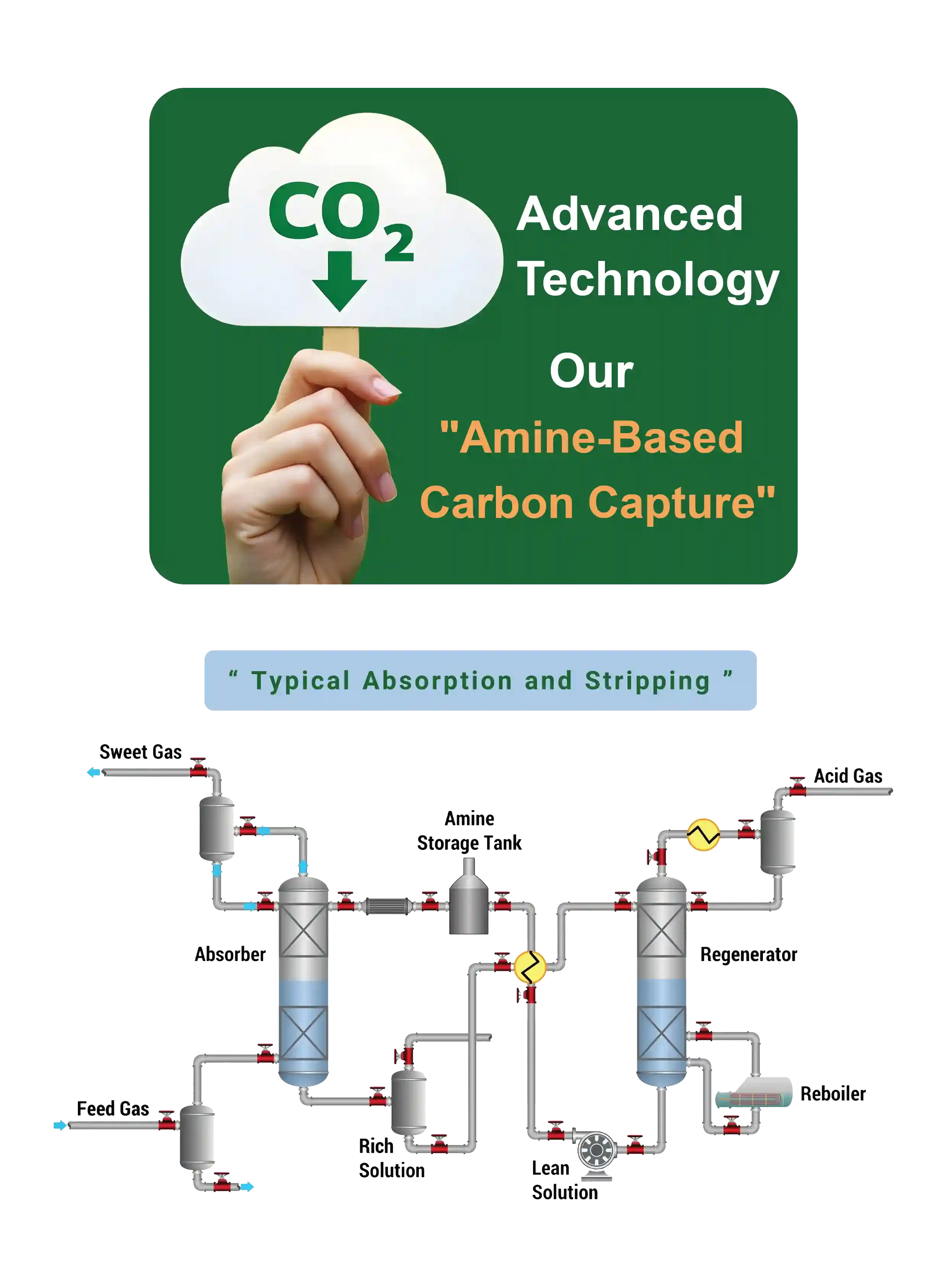
Amine carbon capture systems utilize chemical solvents (amines) that selectively absorb CO₂ from gas streams. When gas contacts the amine solution in the absorption column, CO₂ molecules chemically react and bind with the amine.
The CO₂-rich solution is then transferred to a regeneration column, where heat separates CO₂ from the solvent, collecting it in a purified form for compression and reuse. The regenerated amine solution is returned to the absorption cycle.
This process, typically based on monoethanolamine (MEA)
or similar primary amines, has been successfully applied across industries for decades. However, conventional amine technologies have limitations that reduce efficiency and scalability.

Major Limitations of Conventional Amine Technologies
Although MEA-based systems are proven and practical, they have significant disadvantages:
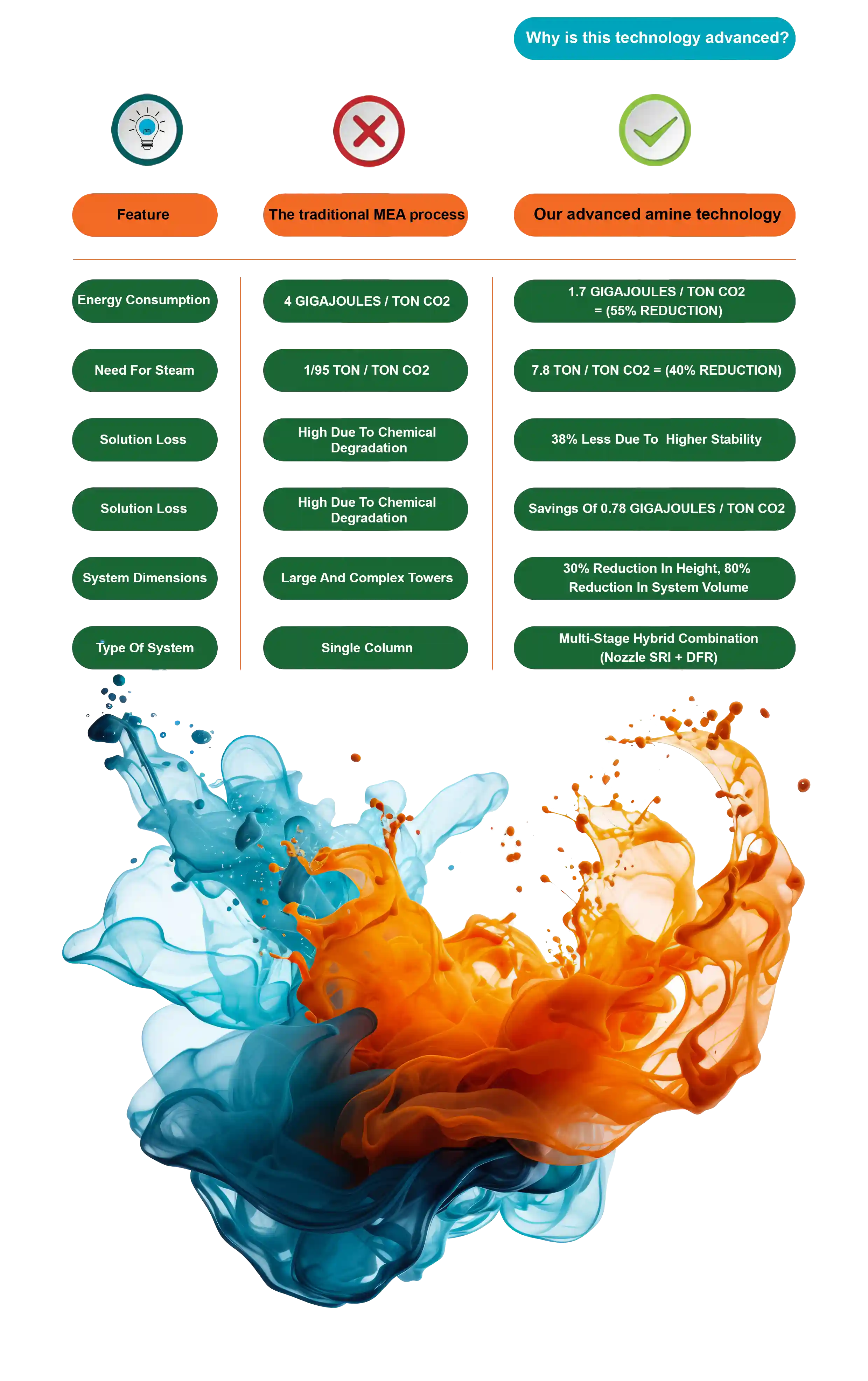
– High energy consumption: Regeneration requires significant heat (approximately 4 GJ per ton of captured CO₂).
– Solvent degradation: Amines degrade over time due to oxidation and reactions with impurities such as SO₂ and NOx.
– Equipment corrosion: High temperatures and chemical reactions cause corrosion in steel equipment.
– Large system footprint: Tall columns and complex equipment increase CAPEX and space requirements.
– High water and cooling demand: Extensive cooling water requirements reduce environmental efficiency.
These limitations have led researchers and technology companies to develop a new generation of advanced amine-based technologies that can reduce energy consumption and costs while simultaneously increasing capture efficiency.
Advanced Amine Carbon Capture Technology
Our carbon capture technology is a next-generation, energy-optimized amine system that overcomes the limitations of traditional MEA-based technologies. By combining high capture efficiency, low regeneration energy, modular design, and proven solutions, it delivers a compact and economical system for effective carbon capture.
Key Advantages
– Proven at large industrial scale (over 300 tons per day)
– Compatible with flue gas systems in petrochemical, LNG, power generation, and cement industries
– Modular, plug-and-play design with low manpower and maintenance requirements
– Over 60% reduction in energy consumption compared to conventional amine systems
Key Technological Innovations
a) Advanced amine solvent (KOSOL-6 / LIC): Utilizes bicarbonate bonding instead of carbamate, reducing regeneration heat requirements and achieving 99.9% CO₂ purity.
b) Dynamic Flow Reactor (DFR): Reduces system height and footprint by up to 50% while improving energy efficiency.
c) Spray nozzle technology: Increases contact surface and absorption rate using 10-micron droplets.
d) Integrated liquefaction modules (A-300CCL / -300CCL): Combines compression, drying, and liquefaction into a single unit, saving 9% electricity and 4.5% cooling water.
Stakeholder Benefits
– Economic: Reduced CAPEX and OPEX through module standardization and lower energy demand.
– Technical: Aspen-based simulation and optimization for each exhaust gas type; dual capture systems.
– Integrated modularization: 30–50% reduction in occupied space.
Reduced water consumption and zero solvent emissions.
Quick Pitch Introduction
Our carbon capture technology is a next-generation amine system with proprietary solvents and dynamic flow reactors that reduce energy consumption by more than half compared to traditional MEA processes, while delivering 99.5% CO₂ purity. Its modular and fast-installation design makes it an ideal solution for rapid, economical, and sustainable carbon emission reduction across various industries.
How Membrane Systems Work in Carbon Capture
Membrane systems represent an alternative method for CO₂ capture, offering specific advantages over some traditional approaches.
– Operating principle: CO₂ passes through a semi-permeable membrane, while other gases pass more slowly.
– Role of the membrane: Optimized surface contact enables faster CO₂ separation.
Common Membrane Methods
– Polymeric membranes: Created via polymerization of materials such as aromatic polymers or ethylene-based compounds to achieve selective CO₂ permeability.
– Composite membranes: Thin high-permeability layers on porous substrates to enhance mechanical strength and chemical resistance.
Nanofiltration or thin-film membranes: Thin layers increase separation rates and reduce operating pressure.

Key Design Factors
– Pore size and surface structure: Pore dimensions and distribution must allow rapid CO₂ passage while retaining other gases.
– Gas-liquid or gas-gas balance: Selecting appropriate contact systems to optimize permeability and pressure-energy balance.
– Mechanical resistance and lifespan: Composite membrane structures resistant to corrosion and industrial heat.
Key Design and Performance Considerations
– Membrane type selection : based on desired purity, operating pressure, and chemical resistance.
– Contact surface: optimization and module geometry.
– Inlet pressure and pressure: differential control.
– Long-term durability: against corrosion, temperature, and contaminants such as H₂S or mercaptans.
– Maintenance and cleaning: requirements.
– Overall project energy: and economic optimization and ROI analysis.
Common Applications
– CO₂ separaton from medium- to high-volume industrial gas streams
– Pre-treatment or post-treatment of gas streams in CCUS systems
– Small to medium projects requiring limited space and reduced energy consumption
Industrial Applications
– CO₂ separation from power plant and refinery exhaust gases
– Low-energy gas separations compared to conventional methods
– Use as primary or complementary separation units in CCUS systems
Advantages and Limitations
– Advantages: Lower energy consumption compared to some conventional separation processes, industrial scalability, and integration capability with upstream or hybrid systems.
– Limitations: Long-term environmental stability requirements, permeability degradation over time, and capital costs related to base materials and maintenance technologies.
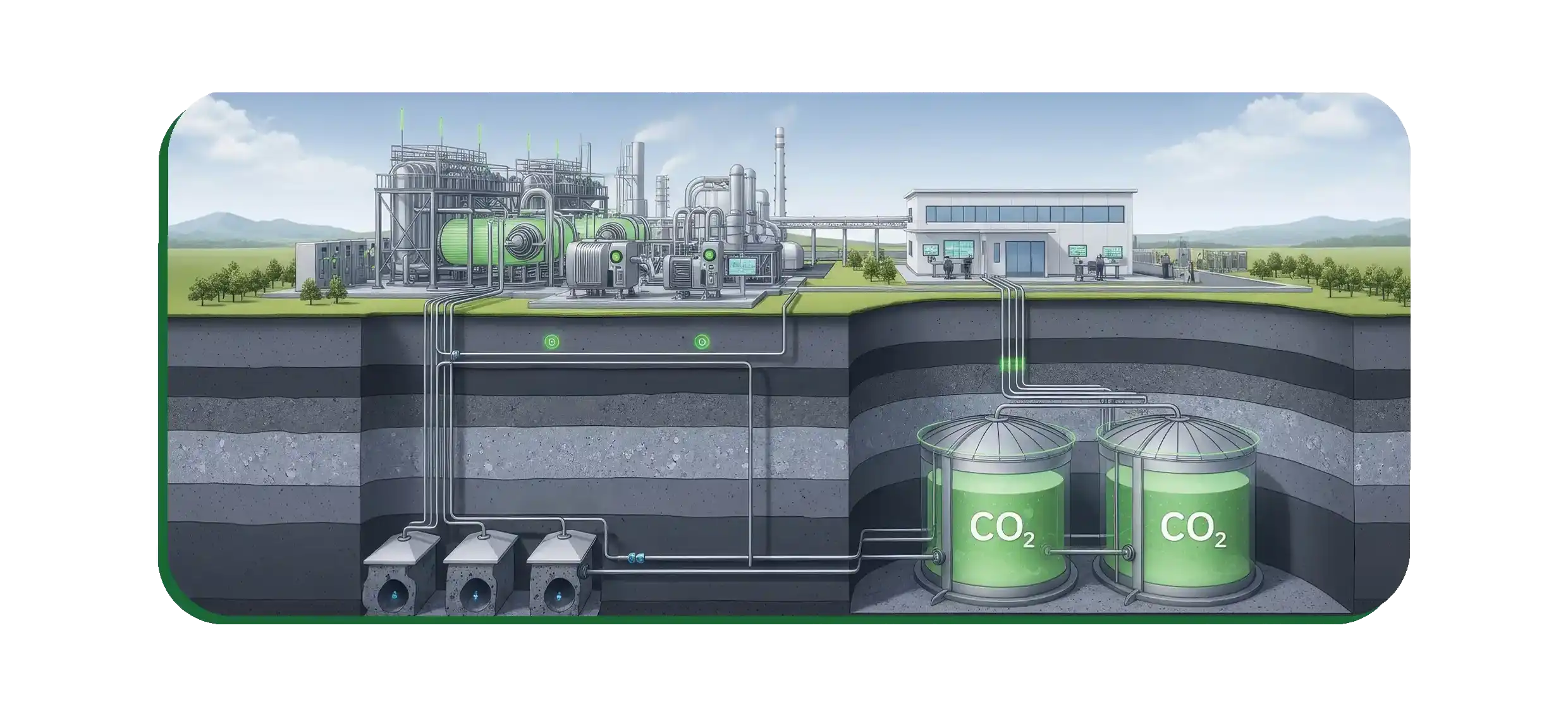

Key Points for Economic and Operational Advantages
– Energy and water consumption: Optimization of amine regeneration cycles can significantly reduce costs.
– Corrosion resistance and solvent lifespan: Selecting durable amines suitable for operating temperatures is critical.
– Contaminant management: Filtration or pretreatment mitigates performance degradation.
– Safety and environment: System design must strictly comply with safety and storage requirements.