Works :​

The Importance of Carbon Capture and Storage 

– Addressing climate change: Reducing the concentration of carbon dioxide in the atmosphere through direct CO₂ capture and storage is one of the key tools for limiting global warming.

– Complementing emission reduction approaches: When preventive greenhouse gas reduction technologies are insufficient, CCUS can serve as part of medium- to long-term solutions to achieve international agreement targets.

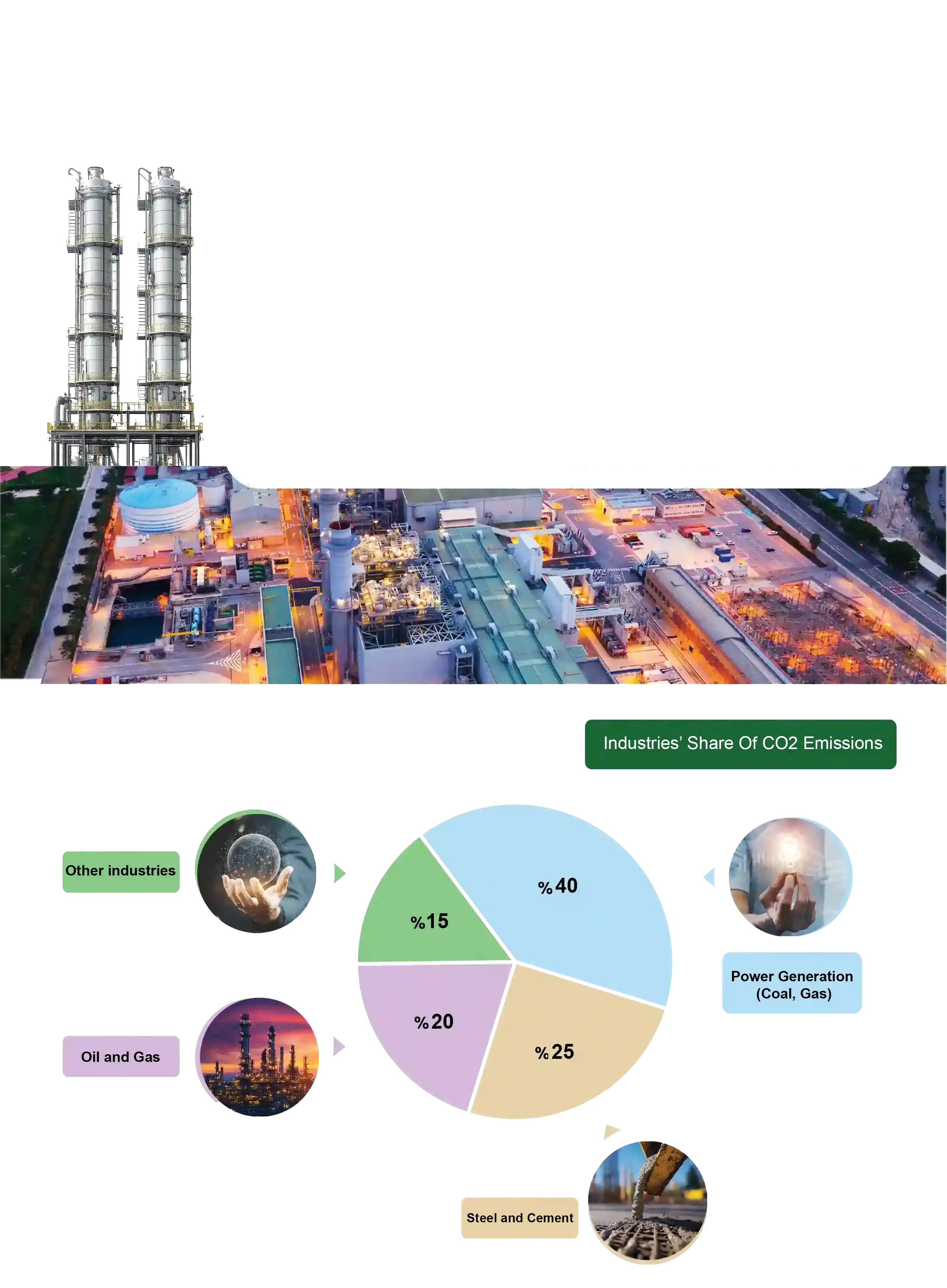
– Utilization in high-emission industries: Heavy industries such as steel, cement, and power generation can significantly reduce CO₂ emissions through CCUS, aligning with regulatory requirements and advanced accreditation processes.

– Economic and technological benefits: By improving energy efficiency and enabling CO₂ reuse or the production of valuable low-carbon products, the return on investment of large industrial projects increases, and the carbon capture and storage technology supply chain is strengthened.

– Environmental sustainability and air quality: Reducing CO₂ emissions while improving air quality and mitigating global warming effects contributes to ecosystem protection and public health.

Structure of Key CCUS Technologies 

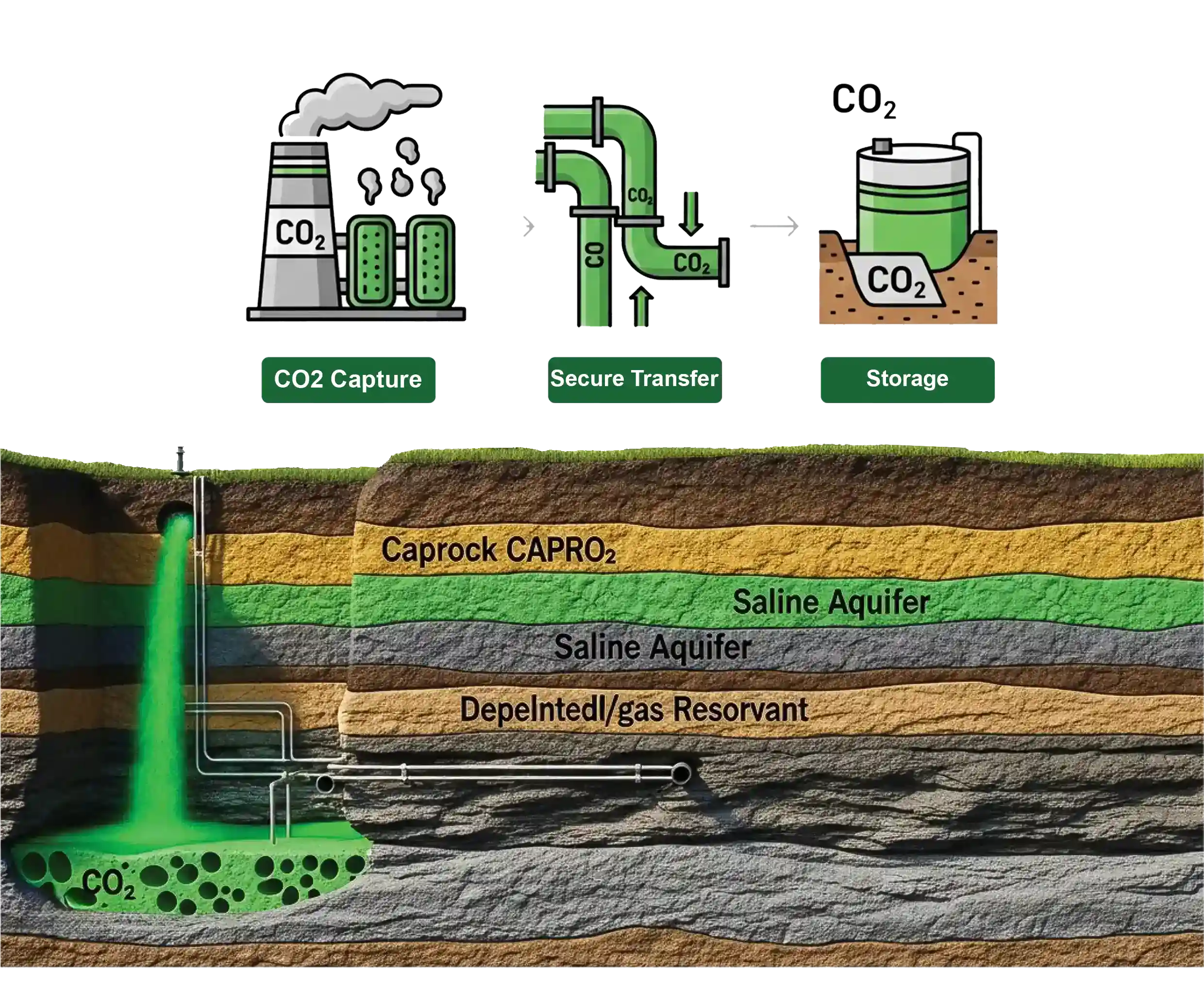
– CO₂ Capture

Using chemical, membrane, physical absorbents, and specialized compounds, CO₂ is separated from gas streams.

– Secure and sealed

transportation
Captured CO₂ is transferred to storage tanks or reuse units, preventing re-emission.

– Storage or reuse

CO₂ is stored in geological reservoirs, rock formations, or industrial compounds, or reused in various product forms.

Challenges and Strategic Considerations 

– Energy consumption and cost: The energy required for gas capture and compression can increase costs; energy optimization and economic design are critical.

– Storage safety and stability: Leakage risks and long-term storage integrity must be carefully managed.

– Regulatory frameworks and carbon markets: Project success depends on local regulations and the availability of carbon markets and financial incentives.

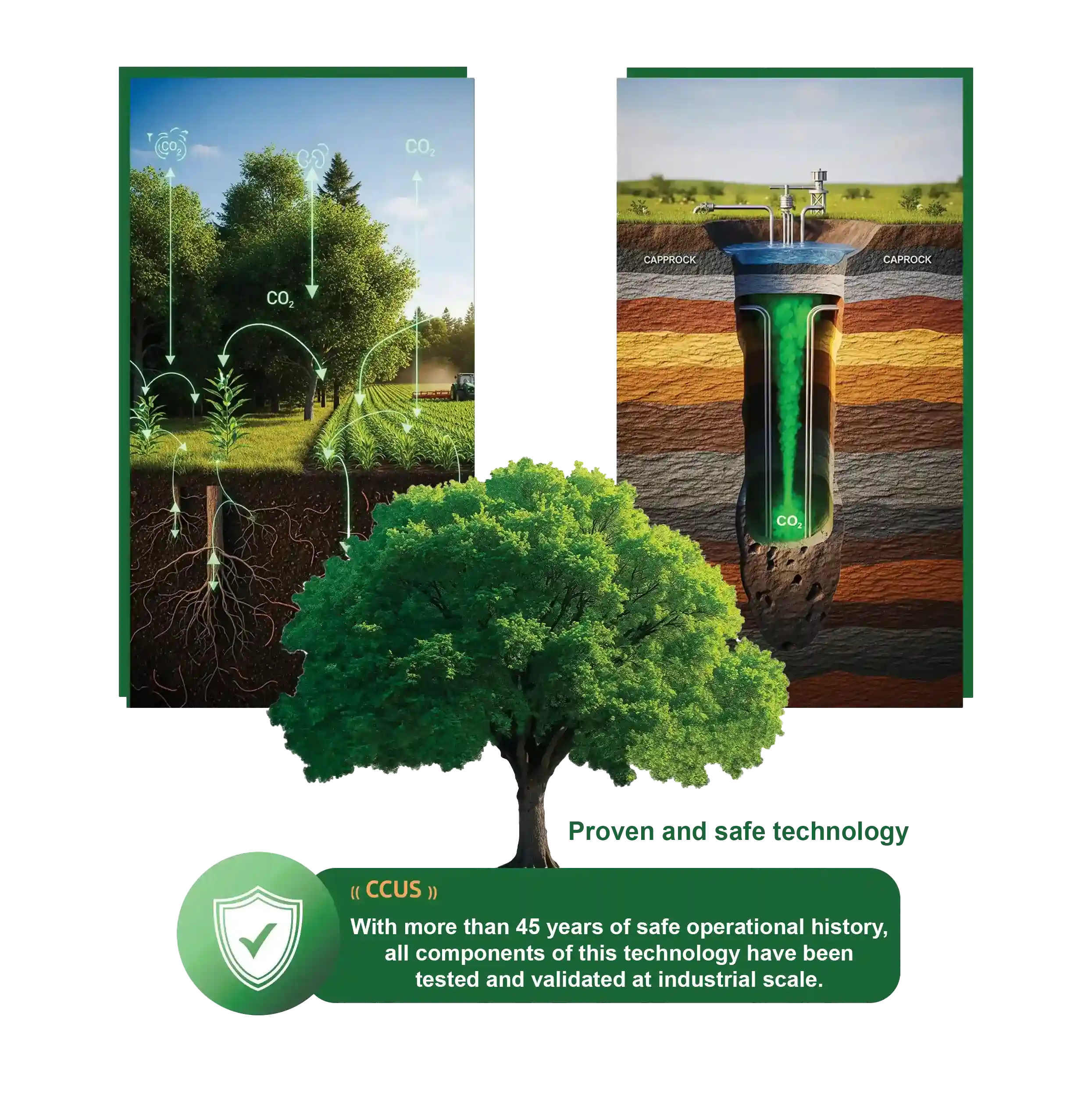
Carbon Storage Methods  

1. Biological

Natural CO₂ absorption by plants and soil

Example: afforestation, carbon-focused agriculture

2. Geological

Injection of CO₂ into depleted oil and gas

reservoirs or saline aquifers

Example: Northern European projects

keyboard_arrow_up